
From Opinions Desk
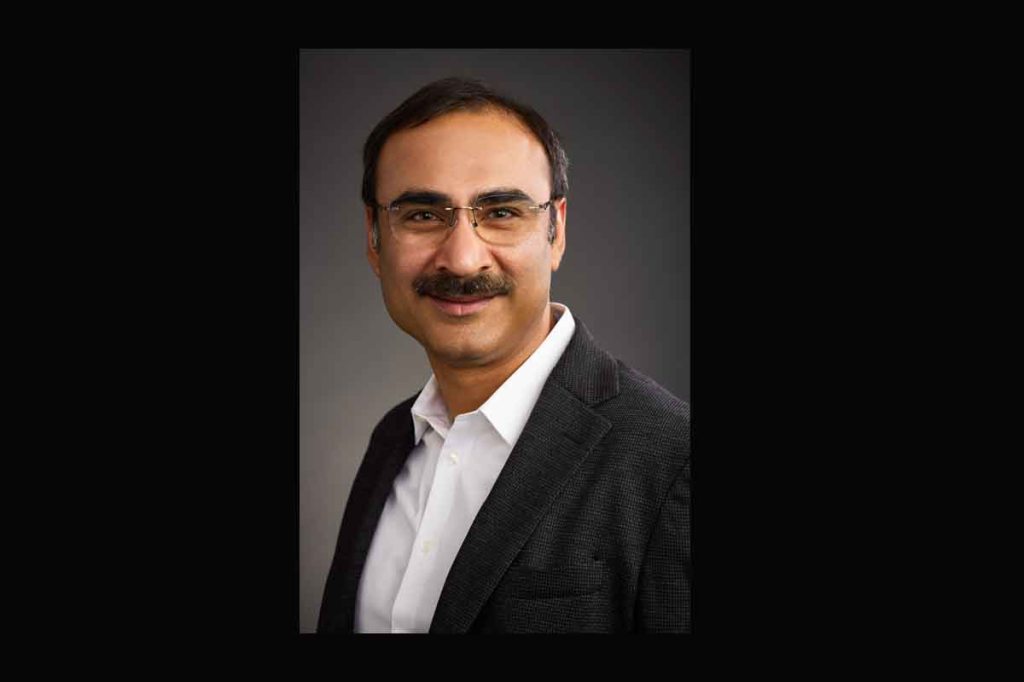
By Mrinal Kochar, Senior VP, SSD Engineering, Sandisk
The rise of India’s datacentre (DC) market has been staggering, with the country witnessing a rapid expansion in both the establishment of new facilities and the scaling up of the existing ones. This current trend is anticipated to accelerate in the next five years. While this rapid growth underscores the critical need for scalable and power efficient solutions for the DC market, two clear insights also emerge from this data.
First, India’s appetite for data is huge, which is unsurprising given its population size, widespread access to affordable internet; and minimal barriers to both consumption and creation of data. Second and perhaps more interesting, is the DC industry’s pragmatic shift in how it measures scale. The size of DCs is not defined by their physical footprint or in square feet anymore, but by their power capacity or in kilowatts (kW). This is a more meaningful way of measuring DC capacity, especially as AI is increasingly becoming the primary workload. As accelerated compute resources, such as GPUs, generate increasing power demands, datacentre architects are asked to deliver higher performance while adhering to stringent power budgets.
This phenomenal shift in DC workload is underscoring a surge in demand for power efficient and scalable infrastructure. While GPU’s get most of the attention for power draw, all parts of infrastructure including memory and storage require efficiency. Consequently, new benchmarks in high performance storage devices such as solid-state drives (SSDs) are emerging and gaining attention.
Storage can Offer Performance and Power Efficiency
In AI-driven DCs, accelerated compute resources put strenuous demand on power and performance. As per a report, electricity demand from DCs worldwide is set to more than double by 2030 to around 945 terawatt-hours (TWh), slightly more than the entire electricity consumption of Japan today. AI will be one of the most significant drivers of this increase, creating need for a more efficient storage infrastructure, supplemented with ultra-high capacity, power-efficient, performance drives. While fast performance will help maximize GPU utilization, the high-density will deliver greater capacity in the same footprint, supporting smarter power management to align with constrained power budgets.
As a result, a new metric for SSDs in AI-driven data centers, Performance/Power Efficiency (PPE), has emerged as a critical benchmark. The traditional benchmarks that used conventional I/O metrics to measure storage performance, though still important, do not account for the pressing importance of power efficiency. PPE combines performance and power consumption into a single metric, enabling DC architects to make informed decisions about storage infrastructure to meet Service Level Agreements (SLAs) within power-constrained environments.
The Future
As part of this continued growth of DCs and predominance of AI workloads and the rising demands for scale and power, we must spur and apply innovation and benchmarking toward more efficient solutions. PPE will play a central role in enabling Datacentres to deliver on their AI-driven SLAs while maintaining cost efficiency.
 News N Opinions...