
From News Desk
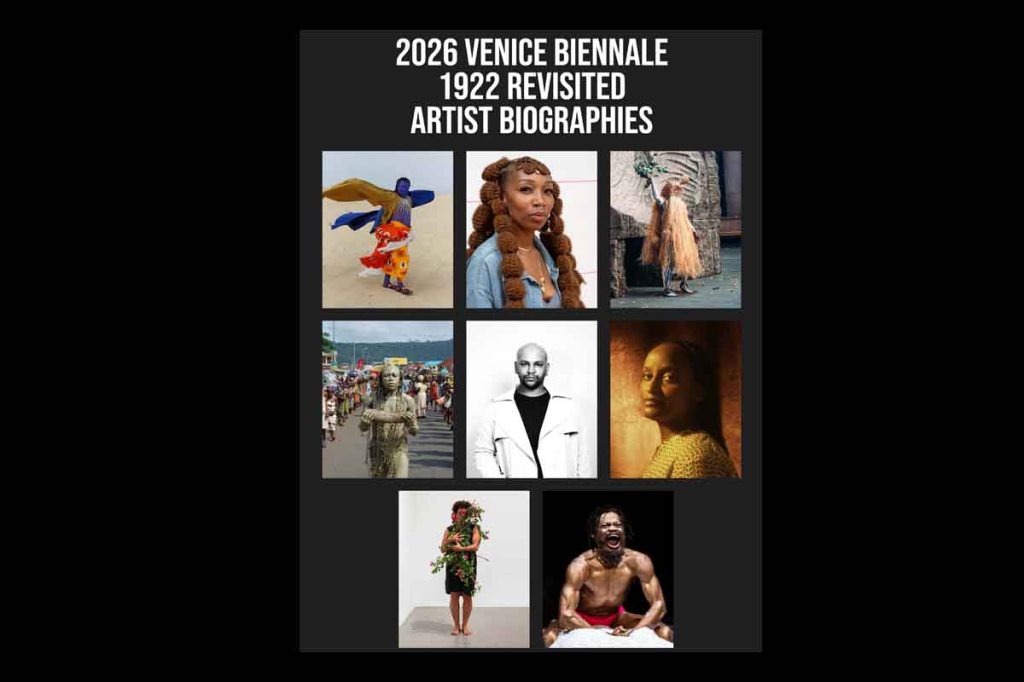
During the preview week of the Venice Biennale, on May 5th–9th, 2026, Third Space Art Foundation will present 1922 Revisited, a live arts programme curated by Dr Janine A Sytsma. Bringing together artists from across Africa and its diasporas, the initiative engages the historical framing of African art within the 1922 Biennale through contemporary performance.
The project takes as its point of reference the 1922 Venice Biennale, in which African objects were presented within a broader exhibition context. The surviving record of this exhibition is fragmentary, consisting of limited archival materials.
A century later, 1922 Revisited returns to this point through contemporary performance. The programme unfolds across multiple sites in Venice and includes a series of live works that engage questions of memory, embodiment, and the relationship between archive and lived experience.
“1922 Revisited offers a platform for contemporary performance artists to confront the imperial logic of the Biennale, amplify long-silenced voices, introduce epistemologies rooted in African thought; and envision possibilities for renewal.”
The project draws on performance as a means of engaging archival material in ways that are both interpretive and experiential. In this context, artists work with the archive not as a fixed record, but as a point of departure, activating its fragments through movement, presence and public interaction.
1922 Revisited is developed in dialogue with the curatorial framework of the 2026 Biennale. Its theme, In Minor Keys, emphasises attention to affective, sensory and interpretive dimensions of artistic experience, creating space for reflection, listening; and encounter.
Within this context, the programme positions performance as a means of engaging historical material in the present. The works do not reconstruct past exhibitions, but instead draw from archival fragments to create new forms of encounter, opening space for reflection on how such histories are approached and understood.

