
From News Desk
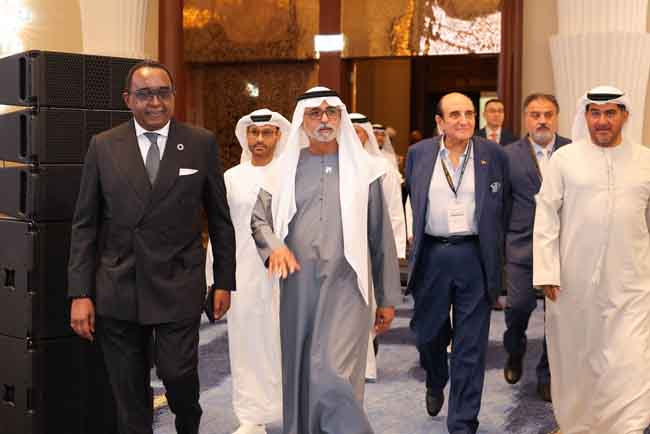
Sheikh Nahyan bin Mubarak Al Nahyan, Minister of Tolerance & Coexistence, inaugurated the SAMENA Telecommunications Council Leaders’ Summit 2026, held at Atlantis The Palm in Dubai, under the theme Intelligent Networks for Sovereign and Sustainable Futures. The summit convened at a sensitive time in the region, bringing together a distinguished group of leaders and decision-makers from the telecommunications, technology, policy and investment sectors, underscoring the importance of continued dialogue, coordination and strengthened partnerships across the industry.
The summit was held in strategic collaboration with Huawei and under the principal patronage of the Telecommunications and Digital Government Regulatory Authority (TDRA), reflecting the UAE’s continued leadership in advancing a stable, forward-looking digital ecosystem. The event witnessed broad participation, both in person and virtually, from key stakeholders across the digital landscape, reaffirming the UAE’s position as a trusted hub for industrial cooperation and strategic dialogue.
In this context, Sheikh Nahyan bin Mubarak Al Nahyan delivered a keynote address at the opening of the summit, where he said, “It gives me great pleasure to join you on this important occasion. I would like to begin by extending my warmest congratulations to the SAMENA Council on the occasion of its twentieth anniversary. Over the past two decades, the Council has played a constructive role in shaping dialogue, fostering cooperation and advancing strategic thinking across our region. During these years, I have come to know the SAMENA Council as an organisation that embraces creativity, innovation and forward-thinking, with a strong ability to adapt, while maintaining a deep commitment to regional development and global connectivity. Twenty years may not be a long time in the life of some institutions, but in the life of the digital economy, it represents multiple generations. When SAMENA was founded, broadband was a luxury, smartphones did not exist as we know them today; and the idea that AI would one day be central to national economic strategies seemed closer to science fiction. The Council’s success and its growing relevance year after year reflect the clarity of its vision and its ability to evolve without losing its core purpose. I commend your significant contributions to shaping the digital and economic landscape of our region and express my appreciation for your steadfast commitment to our shared vision of an inclusive and sustainable digital economic future.”
The summit witnessed strong participation from telecom operators, regulators, global technology providers and international organisations. Partners contributed specialised sessions addressing key industry transformations, including the evolution of advanced 5G technologies, the integration of AI into networks and industrial systems; and the emergence of new connectivity models combining terrestrial and non-terrestrial networks.
AI featured prominently, with sessions examining its transition from experimentation to real-world deployment, alongside governance, accountability and alignment with national priorities. The concept of sovereign AI was also highlighted as a practical framework to balance innovation with regulatory sovereignty.
The summit also addressed the accelerated transformation of telecom companies into broader technology-driven business models, the integration of terrestrial and satellite networks, and the emergence of direct-to-device connectivity technologies, enhancing coverage and network resilience while requiring greater coordination in spectrum management and regulatory standards.
In this context, the upper 6 GHz band emerged as a key discussion point, with participants stressing the importance of aligning spectrum policies with future requirements. The summit also highlighted issues related to space sustainability and orbital governance amid increasing space activity.
A high-level CEO session explored leadership roles in shaping the future of digital infrastructure and innovation, showcasing practical applications of artificial intelligence such as digital twins to support strategic decision-making.
 News N Opinions...