
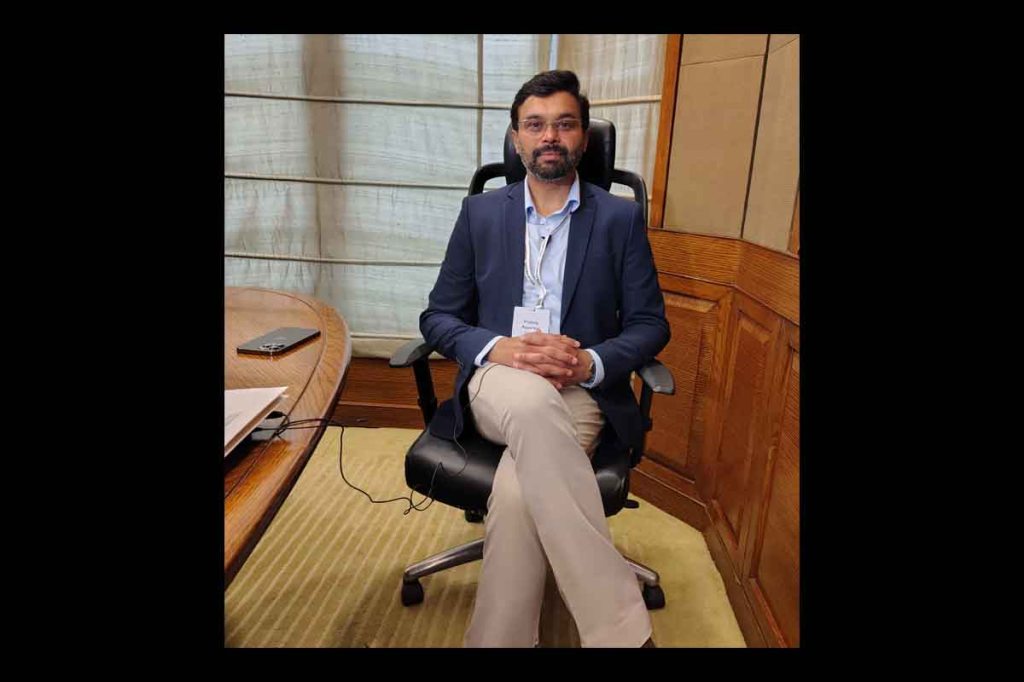
Interaction with Pradeip Agrawal, Co-Founder and CRO, Stratbeams
From Opinions Desk
What challenges do you face while implementing this platform of learning at scale for the workforce in companies?
Fear of losing jobs is constant across all industry segments across all times. Whenever a platform like this is implemented, the people ask why it is needed. Then, we need to do change management. During running the change management, we survey the workforce and we work closely with them and with the HR team. We study their psyche, their mindset and we try to figure out how this learning programme is useful for them. For example, if it’s an insurance company, then the incentive of the insurance agent should rise and they should make more money. So, we tell them that this learning platform will help them to make more money. For example, a client was going through the digital journey which included monitoring IDs and cards. The workers saw this as a form of surveillance. So we ran a campaign through which we tried to convince them that this was good for them and it was in their interest. In another case, the client was a retail chain that had problems in training its workers. Some workers were just high school level education. We implemented this learning platform. A girl was winning every month. I asked her what her motivation was. She said her younger brother loved chips. If she topped the training, she could pick up a packet of chips for free. Hence, he tried to top every month.
So finding the gains in the learning for the end audience i.e., the workforce is our main challenge. We try to convince them that this training is gainful for them.
What is the meaning of scaling through learning on this platform?
The end goal of this training is that it should increase the productivity of the company and of the end audience i.e., the workers, or it should increase the sales. For that, the training time is divided into short duration e.g., one hour, not the total of hundred hours. Then we study whether the productivity or sales is increasing after this duration. So, we try to find the business objective which can be mapped and this training is expected to generate increase. Hence, we don’t call it training; we call it revenue, sales or productivity enablement. This changes the dynamics.
How can the organisations know that their performance and business outcomes are improving?
The credit goes to our CTO. He has created some tool, where training is happening at the level of CRM. Data is coming from there and AI is publishing the results on a dashboard which directly shows the results between two. This leads us to some questions which we keep on improving upon. We have a customer success team, which talks to the end client every month about the progress and what can be improved. So, it’s a progressive process. It’s not a software implementation. It’s a journey. Their adoption, usage and ROI are continuous. We have a strong customer success team through which we give them ideas about how to improve.
What are the key steps that an organisation should implement while running this platform to make it successful?
When I am discussing with prospective clients I try to find out their reasons for wanting to adopt this platform. If they are not able to identify their reasons, then I know that my project may not be successful. First step is to identify the end audience, their motivation and psyche, their background profiles. Our system at an automobile company was failing. I talked o the Chairman and he suggested that we should talk to the dealers. W found that the time of training was not right. For example, training should not be given when many customers are coming to purchase their products and dealers have to attend to their customers. Finding the correct time, correct mood of the end audience, the goals that they have to achieve, their motivation level, design the correct strategy etc. are the key steps before the implementation of the programme. We do it through our customer success teams.
For a real-time version of the interview, see this link.
 News N Opinions...